
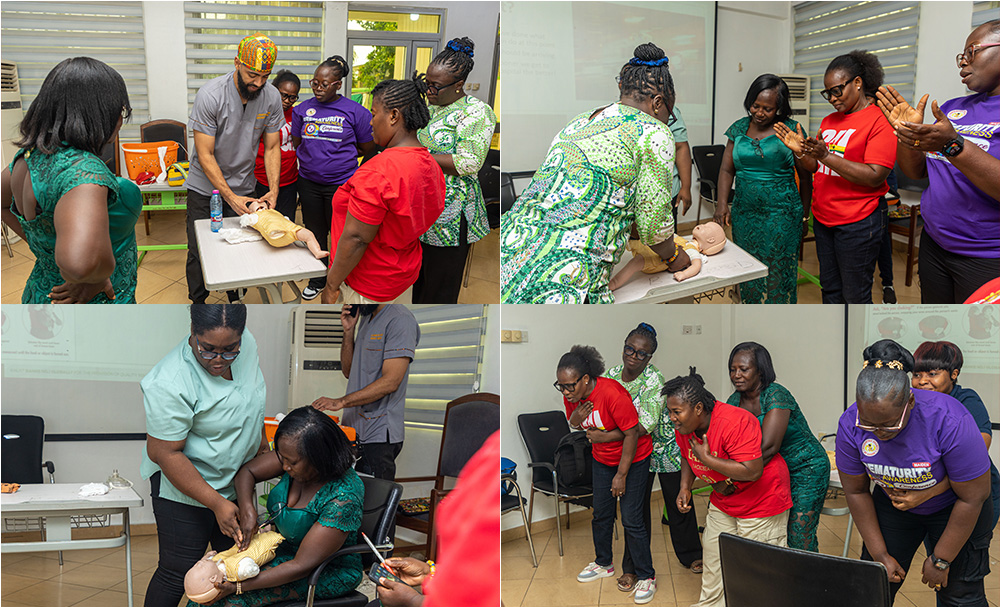
The Preschool Section of the KNUST Basic School has partnered with the KNUST Hospital to train members of its First Aid Team as part of efforts to strengthen emergency response and improve the safety and wellbeing of learners.
The initiative forms part of plans to establish a fully equipped sick bay at the preschool while building the capacity of staff to respond effectively to emergencies involving children and other members of the school community.

Addressing participants, the Deputy Head of KNUST Preschool, Mrs. Olivia Ayensu, said the training was prompted by the growing need to improve emergency preparedness within the school.
"We decided to set up our first aid room, or what we call the sick bay, and we sought support from the KNUST Hospital. As part of their support, they agreed to train our First Aid Team first, after which they will return to train the entire staff," she said.
She said the hospital is also supporting the school to refurbish and equip the sick bay to enhance its capacity to respond to medical emergencies.
"There have been quite a few emergency situations involving our children, and we felt we were not adequately equipped to manage them. This training is the first step towards improving our emergency response."
"The hospital has also promised to support us with equipment for the sick bay, and we are grateful for their continuous support," she added.
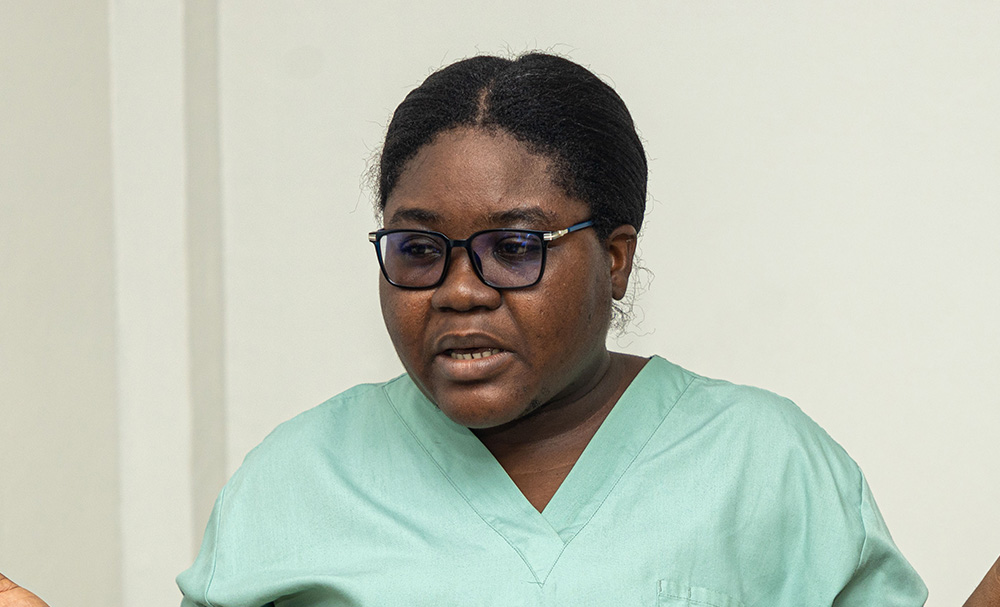
Dr. (Med.) Irene Dzifa Avotri and Ms. Felicia Amankwah, an Emergency Nurse Specialist from the University Health Services (UHS) Emergency Unit, facilitated a session on Emergency Response Strategies: A Doctor's Guide to Pre-Hospital Care.
Dr. (Med.) Avotri underscored the critical role of bystanders in emergency situations, noting that survival often depends on the willingness and ability of those nearby to intervene.
"The biggest difference between victims who survive and those who don't is a bystander's willingness and capability to help. Many people want to help during emergencies but lack the knowledge to do so safely. Today, we are here to build that capability," she said.
Participants were introduced to the principles of first aid, which focus on preventing injuries from worsening while awaiting professional medical care. They were encouraged to remain calm, ensure their own safety, and seek immediate medical assistance whenever an emergency occurs.
The facilitators emphasised three fundamental steps in emergency response, Stay Calm, Stay Safe, and Call for Help, describing them as the foundation of effective pre-hospital care.
"First aid is the immediate care we provide to someone who is injured or suddenly falls ill. The goal is not to cure the person but to prevent the situation from getting worse until professional medical care is available," the trainer explained.
The practical session was facilitated by Dr. Kwame Adjei Akrasi, Medical Officer, together with Dr. (Med.) Irene Dzifa Avotri and Ms. Felicia Amankwah. Participants received hands-on training in scene assessment, basic life support, cardiopulmonary resuscitation (CPR), recovery positioning, airway management, bleeding control, choking management, seizure response, burn care, fracture immobilisation, and the safe use of an Automated External Defibrillator (AED).
"Whenever an emergency happens, remember these three things: stay calm, stay safe, and call for help. These simple steps ensure that you protect yourself while providing the best possible assistance to the victim," the facilitators advised.
The training concluded with practical demonstrations and simulations of common emergencies in preschool settings, allowing participants to apply the skills they had acquired under the guidance of experienced emergency care professionals.


